





By Gorret Kajumba
www.mknewslink.com
In Kasese—-
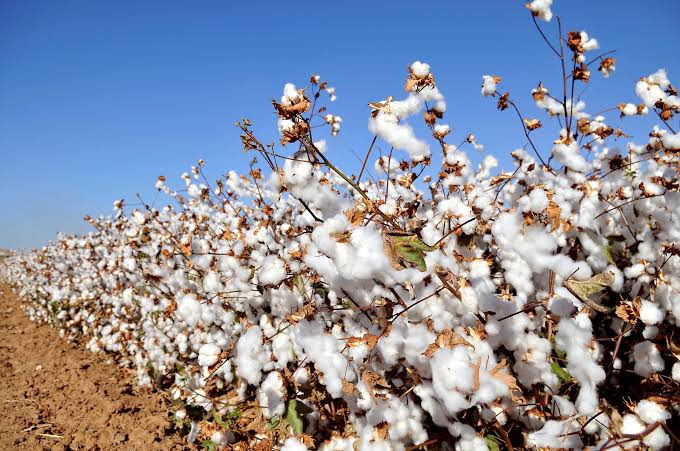
Kasese district remains one of Uganda’s traditional cotton growing areas, but the crop that has supported generations of families is increasingly under pressure from climate change, rising production costs and unpredictable market prices.
The district has three cotton ginneries; Rwenzori cotton ginnery in Nyakatonzi, Hamudani ginnery and Mundawulira ginnery, all located in Kasese Municipality.
These ginneries are the main buyers of cotton produced by local farmers.
Cotton is planted once a year, usually in July or August depending on the onset of rains, and harvested between February and March.
Major growing areas include Nyamwamba Division in Kasese Municipality, Muhokya Sub-county and Mubuku Town Council.
For Eric Mwesige, a cotton farmer from Rukoki Cell in Nyamwamba Division, growing cotton requires patience and significant investment.
He cultivates more than four acres and says the crop must be weeded about six times and sprayed regularly before it is ready for harvest after about six months.
Mwesige revealed that unlike food crops, cotton cannot directly feed a family and farmers depend entirely on selling their produce to ginneries, which determine the buying price.
Mwesige says farmers need government support through subsidized agricultural inputs, particularly pesticides, as well as a fair pricing system agreed upon by farmers and buyers.
He says cotton prices have remained between UGX 1,500 and UGX 2,000 per kilogram for many years, while the cost of pesticides and other farm inputs continues to rise.
Despite the challenges, cotton remains a major source of income for many households in Kasese.
Mwesige inherited cotton farming from his parents and now relies on it to support his family. However, he is increasingly worried about climate change because his farm depends entirely on rainfall, with no irrigation facilities available.
He also criticizes the pricing system, saying buyers sometimes announce attractive prices at planting time, only for prices to fall sharply by the time farmer’s harvest.
Another farmer, Rwomubuza John from Kitabu Cell in Muhokya Sub-county, grows more than six acres of cotton.
He says the crop has enabled him to educate his children and build rental houses.
His children have also embraced cotton farming, making it a family business.
However, Rwomubuza says farmers deserve better prices considering the high cost of production and labor required to grow cotton.
Adrian Katwetegeke, Regional Field Officer for the Uganda Cotton Ginners and Exporters Association, says the association supports cotton farmers in Kasese, Rubirizi and Kamwenge districts through production and marketing services.
He says although the planting season normally begins in July, rainfall has become increasingly unpredictable.
Farmers are therefore advised to prepare their gardens and wait for sufficient rainfall before planting instead of rushing to plant after the first light showers.
According to Katwetegeke, some farmers plant too early because they fear missing the season, only for their crops to suffer prolonged dry spells later.
He says expanding irrigation schemes would help reduce farmers’ dependence on rainfall.
While the government established Mubuku Irrigation Scheme has benefited some farmers, Katwetegeke says it covers only a small area, leaving many cotton growers without access to irrigation.
He also identifies pests, diseases and fluctuating international cotton prices as major challenges facing the sector. Since much of Uganda’s cotton is exported, global market trends directly affect local prices.
Katwetegeke says farmers earned between UGX 1,500 and UGX 1,700 per kilogram last season, compared with UGX 1,900 to UGX 2,000 in previous seasons.
Kasese District Principal Agricultural Officer, Julius Rukara says the district has long been recognized for cotton production, with the season generally running from July to February.
However, production remains almost entirely rain fed.
Rukara encourages farmers to prepare their gardens so they are ready to plant when reliable rains begin.
He says cotton is increasingly competing with more profitable crops such as cocoa, vanilla and coffee, prompting some farmers to abandon it because of low returns.
He added that expensive pesticides, pests and diseases are also increasing production costs.
To improve the sector, Rukara calls on the government and the National Agricultural Research Organization (NARO) to develop early maturing cotton varieties that can be harvested within three to four months.
He says that this would reduce farmers’ exposure to increasingly erratic weather conditions.
He also stresses the need to expand irrigation to help farmers cope with prolonged dry spells and floods associated with climate change.
Government plans to extend irrigation around the Mubuku area could significantly improve cotton production if implemented.
For Kasese’s cotton farmers, the future of the crop now depends on more than favorable rains. They want fair and predictable prices, affordable farm inputs, improved seed varieties and expanded irrigation.
Without such interventions, many farmers fear they may continue abandoning cotton for crops that offer better and more reliable returns.