
By Ismail Bategeka
www.mknewslink.com
In Kampala—-
The National Agricultural Research Organisation (NARO) is seeking private investors to commercialize its existing research facilities as funding from development partners continues to decline.
The proposed public-private partnerships (PPPs) are expected to generate additional revenue to support agricultural research, technology development and the organization’s long-term financial sustainability.
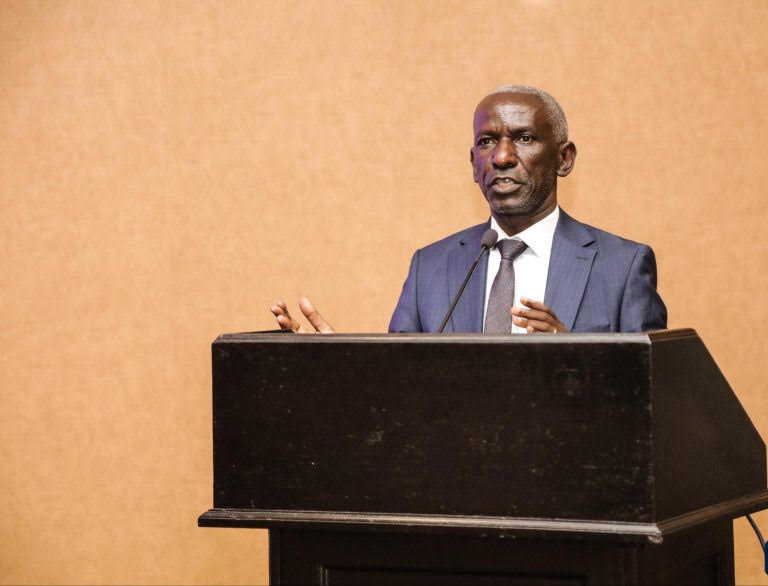
The proposals were discussed during a top management meeting at Speke Resort Munyonyo on Wednesday, November 4, 2026, where officials reviewed project concept notes and feasibility studies for potential investments.
NARO Director General Dr Yona Baguma said the organization had invested in infrastructure and technologies whose commercial potential could generate income beyond their primary research functions.
“NARO has several facilities whose capacity we need to harness to generate revenue for sustainable agricultural research and also make a contribution to the national coffers,” Baguma said.
Facilities being considered for commercial partnerships include the dairy processing plant and livestock feed mill at the National Livestock Resources Research Institute (NaLIRRI), and the fish feed mill at the National Fisheries Resources Research Institute (NaFIRRI) in Kajjansi.
Others include a feed sorting facility at Mbarara Zonal Agricultural Research and Development Institute, automotive garages across NARO institutes and hostel facilities at NaFIRRI in Jinja and Mukono Zonal Agricultural Research and Development Institute.
The arrangements would allow private companies to commercially utilise machinery and infrastructure whose full capacity may not always be required for research.
Baguma said diversifying revenue sources had become necessary as development partner funding declined, despite increased government support.
He commended government for increasing NARO’s annual budget from Shs61 billion to Shs223 billion over the past decade but said additional financing was needed to sustain research programmes.
“Over the last 30 years, we have done a lot as NARO, but we must continue finding ways of securing resources for sustainable research. We need to add value to the facilities we have and make them work for us,” he said.
NARO cites commercial returns
Baguma pointed to existing commercial activities as evidence of the financial potential of agricultural research.
He said licensing private seed companies to produce and sell improved crop varieties developed by NARO was generating more than Shs1 billion.
The organisation’s coffee seed hub generated products valued at more than Shs20 billion during the last financial year, while its anti-tick vaccine manufacturing facility had vaccine stock valued at more than Shs20 billion.
However, the value of products and vaccine stock does not necessarily represent revenue already collected.
“These investments are intended to make NARO more self-sustaining. We must invest our brains and make the right decisions,” Baguma said.
Finance Ministry backs proposal
Jim Mugunga, Executive Director of the Public-Private Partnership Unit at the Ministry of Finance, Planning and Economic Development, welcomed the proposals, saying public institutions needed alternative financing arrangements to supplement government allocations.
“No country can fund everything it needs to do entirely through its national budget,” Mugunga said.
He argued that private partnerships could help research institutions expand commercial production without interfering with scientific activities.
Using animal feed processing facilities and improved pasture production as examples, Mugunga said researchers might require only part of the available production capacity, leaving the remainder for commercial operations.
He said the arrangements could attract private sector financing, technology and expertise while improving the utilisation of public infrastructure.
Mugunga linked the initiative to government’s Tenfold Growth Strategy and Parish Development Model, which seek to increase production, household incomes and participation in commercial economic activities.
The Public-Private Partnership Unit pledged technical support to NARO in identifying and developing commercially viable projects.
However, the success of the proposed partnerships will depend on transparent investor selection, clear revenue-sharing arrangements and safeguards to ensure commercial interests do not compromise NARO’s public agricultural research mandate.