
 By Moses Andama
www.mknewslink.com
In Masindi—
The National Environment Management Authority (NEMA), in collaboration with the Environmental Protection Police and Masindi District Local Government, has launched an operation to evict sugarcane farmers who have encroached on wetlands across Masindi District.
The operation, which commenced on Thursday, November 12, 2026, resulted in the eviction of six farmers who had allegedly encroached on approximately 200 hectares of the Kyanga-Kyakaki wetland in Ntooma Parish, Bwijanga Sub-county.
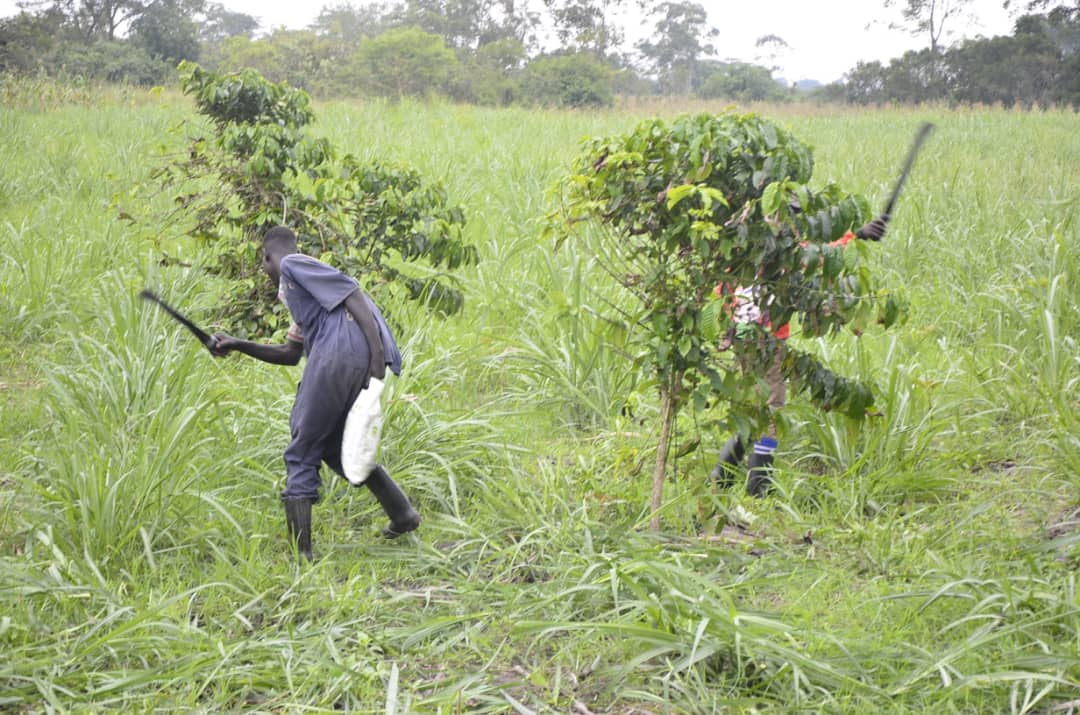
Accompanied by police and UPDF personnel, the enforcement team, with the support of sugarcane cutters, destroyed sugarcane, maize and other crops that had been planted in the wetland. Some of the mature sugarcane was subsequently set ablaze.
The restored area, which had historically served as grazing land for livestock farmers, was immediately opened for cattle grazing following the eviction.
Among those affected were individuals identified as local government employees, businesspeople and members of Kyanga Church of Uganda. Those identified included Bernard Nyakundi, John Bamutraki, a transport officer with Masindi District Local Government, Geoffrey Odama, Alfred Wandera and Patrick Okise, a retired Principal Internal Auditor of Masindi District Local Government.
The affected farmers had previously been issued with environmental restoration orders by NEMA, requiring them to vacate the wetland and restore it within 21 days, but they reportedly failed to comply.
The enforcement exercise is expected to extend to other threatened wetlands, including Rwentahi, Kikingura and Kyamaiso, which collectively cover approximately another 200 hectares.
Masindi District Environment Officer Olivia Nabukenya said the affected wetlands had traditionally been used as grazing grounds by livestock farmers before sugarcane growers occupied them, destroyed indigenous trees and converted the land into agricultural fields.
Nabukenya said her office had initially engaged the encroachers and repeatedly warned them against degrading the wetlands, but they ignored the warnings, prompting her to seek intervention from NEMA and the Environmental Protection Police.
“I first warned them as an environment officer, but they remained adamant until I handed over the matter to the Environmental Protection Police and NEMA. After receiving the restoration orders, we sensitised them and asked them to remove their crops, but they still did not comply,” she said.
She added that the farmers had been given two separate 21-day grace periods to voluntarily vacate and restore the wetlands, but no action was taken.
Nabukenya warned other farmers occupying wetlands in different sub-counties to voluntarily remove their crops and vacate before enforcement teams are deployed.
She said wetland encroachment had also affected several government-constructed water dams in the area, whose water levels depend on the surrounding wetland ecosystems.
“These wetlands are reserves for the water dams, and because they had been severely encroached on, the dams have been affected. We are going to ensure that the entire area is fully restored,” she said.
Nabukenya explained that the Kyanga-Kyakaki wetland is connected to the Ntooma water system, which drains into River Kafu and eventually the River Nile.
She warned that continued destruction of wetlands could undermine water availability in the connected river systems, calling on communities to use wetlands sustainably.
Stephen Emabwor, the Regional Environmental Protection Officer for Albertine North, warned that anybody who returns to cultivate in the restored areas risks arrest and prosecution.
Emabwor said the enforcement agencies follow established procedures by first issuing notices to encroachers before taking action against those who fail to comply.
“Our role is to ensure that the environment is protected. We first serve notices and then take action. We have not started today; we have been doing this,” he said, urging farmers to stop destroying wetlands.
Christine Ainabyoona, NEMA’s Assistant Commissioner for the Albertine Graben, said the authority had been engaging encroachers since 2025, urging them to voluntarily vacate the wetlands, but they had failed to heed the warnings.
She said NEMA subsequently issued formal restoration orders in August 2026 through its Executive Director, giving the affected individuals 21 days to restore the degraded wetlands.
“We gave them ample time to voluntarily restore the wetlands, but nothing happened. When such situations arise, the authority is mandated to undertake restoration at the expense of the degrader,” Ainabyoona said.
She added that NEMA would continue monitoring the restored areas to prevent further encroachment.
The next enforcement operation is expected to target Rwentahi wetland, which stretches across Rwenjojo, Kikingura and Kyakaheeru villages in Ntooma Parish, Bwijanga Sub-county.
The wetland is increasingly threatened by agricultural activities, particularly sugarcane cultivation, despite repeated interventions by the district environment office.
Rwentahi wetland is also home to a government-constructed valley dam established during the 2020/2021 financial year under the Northern Uganda Social Action Fund (NUSAF) to support livestock farming.
However, five years after its construction, the facility, reportedly valued at Shs600 million, is facing pressure from sugarcane farmers who have cultivated the surrounding wetland, raising concerns about its continued use and sustainability.
James Mugisa, a concerned resident who petitioned local authorities over the encroachment in 2025, expressed frustration over the continued destruction despite earlier interventions.
In a petition dated March 7, 2025, addressed to the Masindi Resident District Commissioner, District Police Commander and District Internal Security Officer, among other authorities, Mugisa said an earlier directive issued through the Officer in Charge of Ntooma Police Post to stop the activities had not been respected.
He warned that failure to take decisive action could trigger conflicts between livestock farmers and sugarcane growers, particularly because access to the valley dam was increasingly being obstructed.
Despite subsequent instructions by Nabukenya directing the encroachers to vacate and begin restoration, the activities reportedly continued.
The eviction exercise has been welcomed by some residents who said the restoration of the wetland would provide relief to livestock farmers who had lost access to their traditional grazing grounds.
James Twinomugisa, a resident of Kyakaki, thanked the government for intervening, saying the encroachment had deprived local livestock farmers of land they had traditionally depended on.
“I want to thank the government for this initiative. We grew up here, and we had never encroached on this wetland. People came from far away because they had money and started cultivating crops and planting eucalyptus trees. We are happy that we have got somewhere to graze our animals,” Twinomugisa said.
Wetlands play an important role in environmental protection by regulating water flows, filtering pollutants, replenishing underground water reserves and providing habitats for wildlife.
They also help reduce flooding, sustain water sources during dry seasons and support livelihoods through livestock grazing, fishing and other activities.
Environmental authorities have repeatedly warned that their destruction threatens biodiversity, water availability and the livelihoods of communities that depend on these ecosystems.